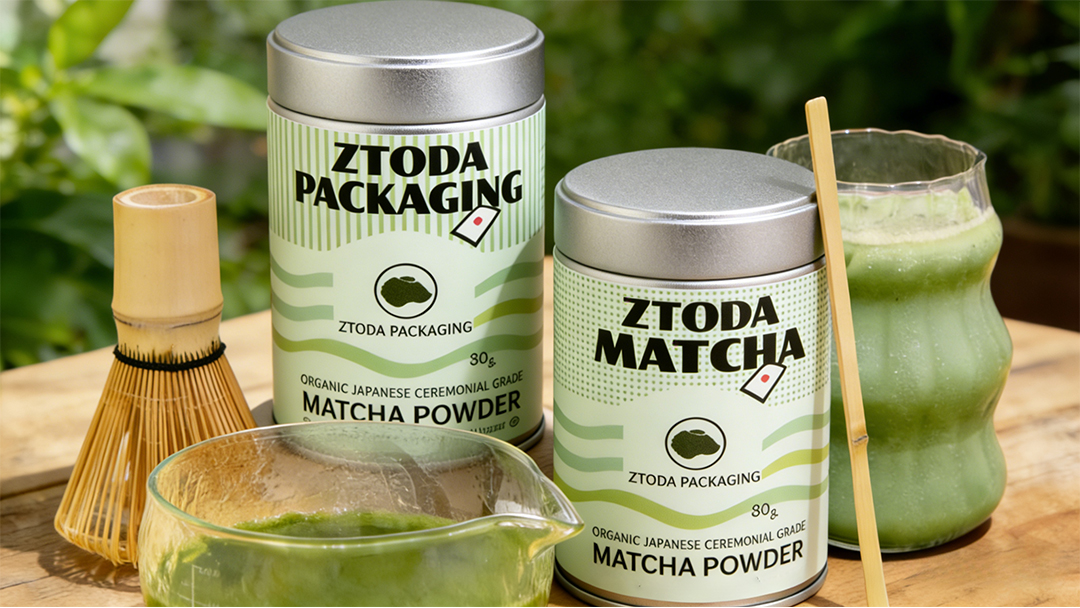
The Ultimate Guide to Custom Matcha Tins: Trends, Materials, and Customization
Matcha Market Trends: 5-10 Year Forecast
The global matcha market is poised for remarkable growth, projected to surge from USD 3,373.6 million in 2025 to USD 6,717.5 million by 2035 with a robust CAGR of 7.1%. This expansion is driven by rising consumer demand for antioxidant-rich, wellness-focused products that blend traditional heritage with modern superfood appeal.
The culinary-grade segment, accounting for 56.2% of the 2025 market, will remain dominant due to its versatility in beverages, bakery, and confectionery, while ceremonial-grade matcha sees high value growth in premium channels.
For brands, this growth brings urgency to protect product quality—making Matcha Tin Packaging- a strategic investment. As North American and European demand outpaces traditional Asian markets, premium, protective packaging like Matcha Storage Tins will become essential to preserve flavor and meet consumer expectations for sustainability and luxury.
Common Matcha Packaging Materials
Matcha’s sensitivity to light, air, and moisture demands specialized packaging. Key materials in the market include:
Flexible Pouches: Zip-lock or stand-up pouches with barrier layers, popular for cost-effectiveness.
Glass Jars: Airtight and inert but light-permeable, requiring dark tinting and careful storage.
Plastic Containers: Lightweight and affordable, but limited in light and oxygen protection.
Cardboard Boxes: Used for outer packaging, often lined with barrier materials but not primary storage.
Metal Tins: Opaque, airtight containers available as Matcha Powder Tins and Matcha Tea Tins.
Vacuum-Sealed Bags: Extend shelf life by removing air, but lack reusability.
Material Comparison: Why Matcha Tins Stand Out
|
Packaging Type
|
Cost
|
Freshness Protection
|
UV Protection
|
Moisture Resistance
|
Durability
|
Brand Customization
|
Weight
|
Reusability
|
Environmental Friendliness
|
|
Metal Tins
|
Moderate
|
Excellent
|
Excellent
|
Excellent
|
High
|
High
|
Light
|
High
|
High (can be recycled and reusable)
|
|
Ziplock Bags
|
Low
|
Moderate
|
Poor
|
Moderate
|
Low
|
Moderate
|
Light
|
Moderate
|
Low (usually made of plastic)
|
|
Paper Pouches
|
Low
|
Poor
|
Poor
|
Moderate
|
Low
|
Moderate
|
Light
|
Low
|
Low (paper with plastic lining)
|
|
Foil Pouches
|
Moderate
|
Excellent
|
Excellent
|
Excellent
|
Moderate
|
Moderate
|
Light
|
Low
|
Moderate (can be recycled)
|
|
Glass Jars
|
High
|
Good
|
Poor
|
Good
|
Low
|
High
|
Heavy
|
High
|
High (recyclable)
|
Matcha Tin Containers outperform alternatives by blocking 100% of UV light (critical for preserving color and flavor ) and maintaining long-term airtightness. Unlike single-use pouches, they support sustainability goals through reusability, aligning with consumer preferences for eco-friendly packaging.
Why Choose Matcha Tins?
Selecting Matcha Tins is a decision rooted in quality preservation and brand value:
Flavor Preservation: Opaque metal prevents oxidation, extending matcha’s shelf life by 6-12 months compared to plastic or clear glass.
Sustainability: Recyclable and reusable, reducing single-use plastic waste—a key buying factor for 73% of wellness-focused consumers.
Brand Enhancement: The premium tactile feel of Custom Matcha Tins elevates perceived value, critical for ceremonial-grade lines.
Versatility: Available in 30g-100g sizes for retail, gifts, and wholesale, fitting diverse market needs.
Protection: Resistant to impact during shipping, reducing product damage compared to glass.
Welded vs. Crimped-Seal Matcha Tins
Two primary sealing technologies define Matcha Tin Container performance:
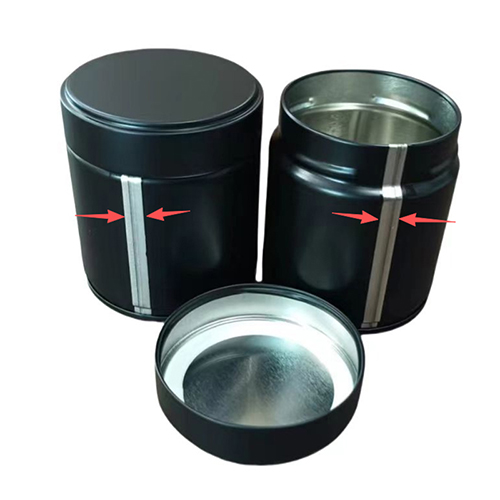 |
Welded Matcha Tin Can |
- 100% Airtight, leak-proof
- Limited shape customization and standard mold size dia60mm, 73mm, 85mm, 90mm, 99mm, 105mm;
- The height of the body is adjustable
- Hidden thread lid
- Visible welding line appearance
|
|
Welded Matcha tins: As the steel substrate dissolves at the welding spot along the can body side seam, resulting in surface oxidation and degradation in corrosion resistance, repair coating is required on both the internal and external surfaces to prevent corrosion. Welded side seam is repaired with OSS (outside side seam striping) coating on the outside to prevent rust, and with ISS (inside side seam striping) coating on the inside to protect the contents. The welded tin can comes in various sizes and mainly in cylinder shapes that are widely used for beverages, canned food(powder, supplement, dog treats, tea, coffee), and aerosol products.
Advantages: Hermetic seal eliminates air leakage; ideal for long-term storage of ceremonial matcha; tamper-evident design builds trust.
Disadvantages: Visible welding line appearance; Limited shape customization and standard international mold size.
|
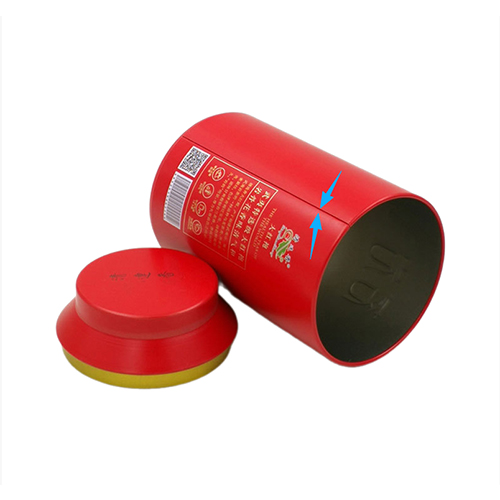 |
Crimped Matcha Tin Can (Lock Seam) |
- Airtight
- High customization(Printing, Size, Shapes, Embossing, Finish)
- Versatile lid types
- Appealing appearance
|
|
Crimped Matcha tins: Printing fully covered and no limitations for shape, structure, and size. While decorative tins are suitable for dried food packaging not workable for liquid or aerosol products.
Advantages: Fully covered and no limitations for shape, structure, and size; compatible with consumer and foodservice applications.
Disadvantages: The sealing performance is not as good as that of a welded matcha tin container.
|
Recommendation: Use welded tins for premium ceremonial matcha and crimp-seal Matcha
Storage Tins for culinary-grade products or repeat-purchase retail lines.
Ztoda Packaging has over 30 years of OEM and ODM metal Matcha tin packaging production experience. We are certified with BRCGS, BSCI, and SGS. Contact us to find the best sustainable packaging for your business.
Custom Matcha Tin Options
Our Custom Matcha Tin solutions balance flexibility with quality, designed to meet diverse business needs:
Minimum Order Quantity (MOQ): 3,000 units for fully customized tins.
Customization Features: Printing: Full-color, brand-aligned designs for Matcha Tea Tins and Matcha Powder Tins.
Dimensions: Custom height and diameter to fit 30g, 50g, 80g, or 100g portions.
Finishes: Embossing, debossing, and matte/gloss coatings for premium texture.
Stock Options: For orders below 3,000 units, choose from ready-to-ship tins in Sandblast Silver, White, or Black—perfect for small-batch launches or urgent restocks.
Custom Labels for Matcha Tins
Labels enhance branding while ensuring practicality. We offer end-to-end label customization:
Recommended Sizes by Tin Capacity:
Lid: 53mm in diameter
Body:
• Dia60*60(H)mm-30g Matcha Tins: 193mm x 35mm labels sizes.
• Dia60*68(H)mm-50g Matcha Tins: 193mm x 43mm labels sizes.
• Dia60*85(H)mm-80g Matcha Tins: 193mm x 60mm labels sizes.
• Dia60*105/120(H)mm-100g Matcha Tins: 193mm x 80/95mm labels sizes.
The circumference of the matcha tin can is 188mm. For better adhesion, the label needs to have a 5mm overlap to prevent it from falling off.
Click here to learn more about how to custom labels.
Premium Label Materials:
• Removable Adhesive: easy to peel, no adhesive residue, and repositionable.
• Permanent Adhesive: The most popular adhesive type that keeps strongly stuck to the surface of the packaging. Don't recommend it.
Service Includes: Design alignment, die-cutting to tin curves, and food-safe adhesive compliance.
Can Sealing Machines for Easy-Open Matcha Tins
For Matcha Tin Packaging with easy-open lids, specialized sealing equipment ensures consistency and safety:
Equipment Type: Semi-automatic can sealers (ideal for 3,000-10,000 units/month) and fully automatic lines for high-volume production.
Key Benefits: Creates airtight, tamper-evident seals that preserve freshness while enabling consumer convenience.
Compatibility: Works with our crimp-seal Matcha Tin Containers in all standard sizes. We provide equipment specifications and supplier recommendations for seamless integration.
Why Choose Our Matcha Tins?
We stand out as a trusted Matcha Tea Tin manufacturer through:
Quality Assurance: Food-safe, BPA-free linings prevent metal interaction with matcha .
Customization Expertise: In-house design support for embossed logos, color matching, and size optimization.
Flexibility: Stock options for small orders and scalable production for growing brands.
Sustainability Commitment: 100% recyclable tinplate and eco-friendly printing inks.
Market Insight: We tailor solutions to align with 7.1% CAGR growth trends, ensuring your packaging drives sales.
Get Started with Your Custom Matcha Tins
Ready to elevate your matcha brand with premium Matcha Storage Tins? Contact our team to:
Receive a free sample kit of stock and custom Matcha Tins.
Get a personalized quote based on your size, quantity, and design needs.
Access our label design templates for 30g-100g containers.
Protect your product, enhance your brand, and capitalize on the booming matcha market—one high-quality tin at a time.


